US High Yield: Compelling opportunity to add higher- quality yield
Insight
October 9, 2026
If you have any feedback on this article or are interested in subscribing to our content, please contact us at opinions@muzinich.com or fill out the form on the right hand side of this page.
--------
Following a sharp sell-off in US high yield, improved valuations are creating an opportunity to add higher-quality yield. With fundamentals remaining resilient and dispersion increasing, we believe the current environment is rich with the potential for strong-risk adjusted investment opportunities.
US credit and equity markets continue to grapple with friction between a strong business investment cycle and rising inflation, leading to relatively stable returns for equities but negative returns for bonds. Inflation running above 3% drove the US Federal Reserve (Fed) to act and interest rate markets are aggressively recalibrating. This resulted in a sell-off and outflows at a time when the high yield market saw heavy issuance of over US$50bn in September, resulting in the broad high yield market’s worst monthly return since 20221 – a year that marked fixed income’s worst performance other than 2008.
Figure 1: B/BB US High Yield: Yields rise as spreads widen
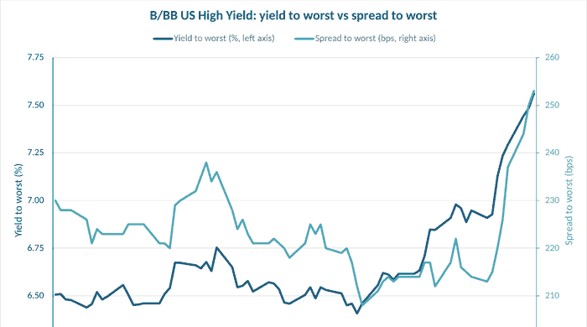
Source ICE Index Platform, as of 30th September 2026. B/BB US High Yield: ICE BofA BB-B US High Yield Index (H0A4). Indices used are the best proxy for subject under discussion. For illustrative purposes only.
Against this backdrop, we consider how our US high yield portfolios have navigated the recent volatility, how we believe investors should position in the current environment and where we see the most compelling opportunities across the market.
Performance: Our US high yield portfolios held up well through the volatility, outperformed their reference indices in the third quarter and remain well ahead of them for the year. Performance was driven by strong loss avoidance and security selection in telecoms/cable as well as robust portfolio positioning with an overweight to short duration bonds trading below par. Our pull-to-par strategy generated steady returns as many of our holdings were called at par despite the vicious fixed income sell-off.
Past performance is not a reliable indicator of current or future results.
How to position: This quarter’s high yield price action was driven by both a rise in interest rates as well as a widening of credit spreads. However, we believe the US growth picture remains intact and therefore only the most indebted high yield companies, many of which reside in the CCC cohort, will see tangible negative impacts from higher rates. We continue to view single Bs as the sweet spot. There is significant dispersion across the investment universe which offers ample opportunity to buy bonds issued by companies with reasonable balance sheets at attractive valuations. As highlighted in last quarter’s update, we recommend investors not reach for yield in the lowest-quality issuers but rather focus most of their portfolio on single B and BB rated bonds.
Figure 2: Q3 US high yield returns: Lower quality underperforms
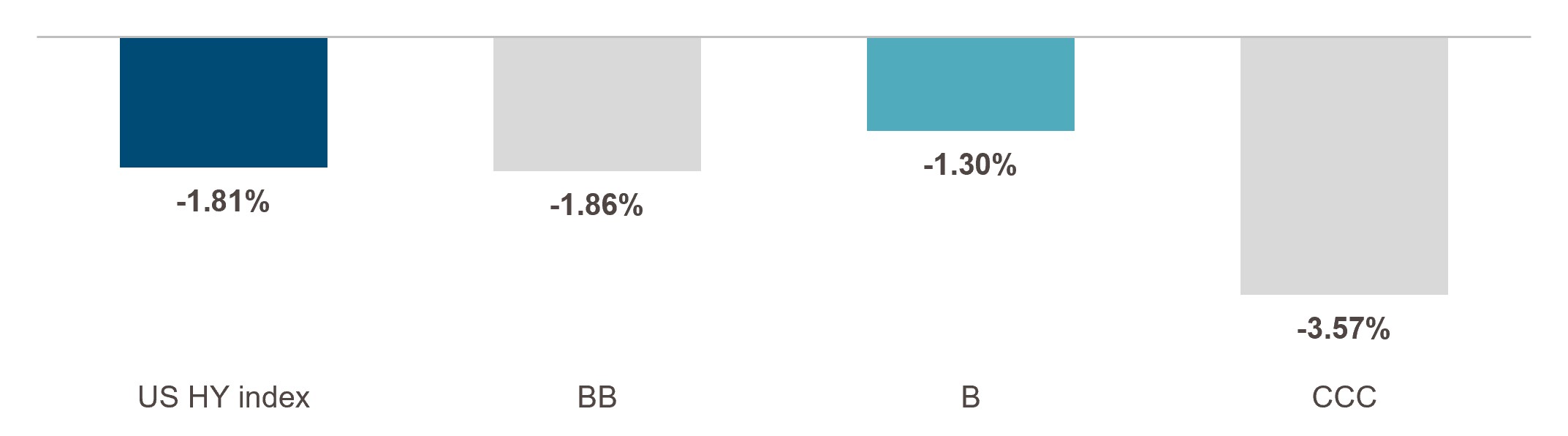
Source: Fig. 2. ICE Index Platform, as of 30th September 2026. ICE BofA US High Yield Index (H0A0) and BB, B and CCC rating cohorts] Indices used are the best proxy for subject under discussion. For illustrative purposes only.
The case for high yield
We believe high yield is attractive because fundamentals remain strong and overall yield levels have improved significantly. With the B/BB high yield index trading at a yield of 7.5% and with a duration of 3.4,2 spreads and/or yields would need to rise by another 220 basis points, not including defaults, for an investor to generate a negative return over the next 12 months.
In our view, for spreads to widen by over 200bps, the market would have to be pricing in a recession, in which case yields typically fall as central banks switch their policy stance to accommodate a weakening economy. Nevertheless, avoidance of defaults remains key in realizing the skewed risk/reward profile offered by high yield, which is why our portfolios have a higher-quality tilt. We have a significant underweight to CCCs relative to peers and the broad high yield index.
To further the case, we can examine historical data plotting starting yields and forward returns. As Fig. 3 highlights, we think there is a strong possibility that high yield could achieve above-coupon returns from here when looking at historical data.
Figure 3: Higher starting yields have historically supported stronger returns
Starting yield to worst (%) and subsequent 2-year return (%), B/BB index
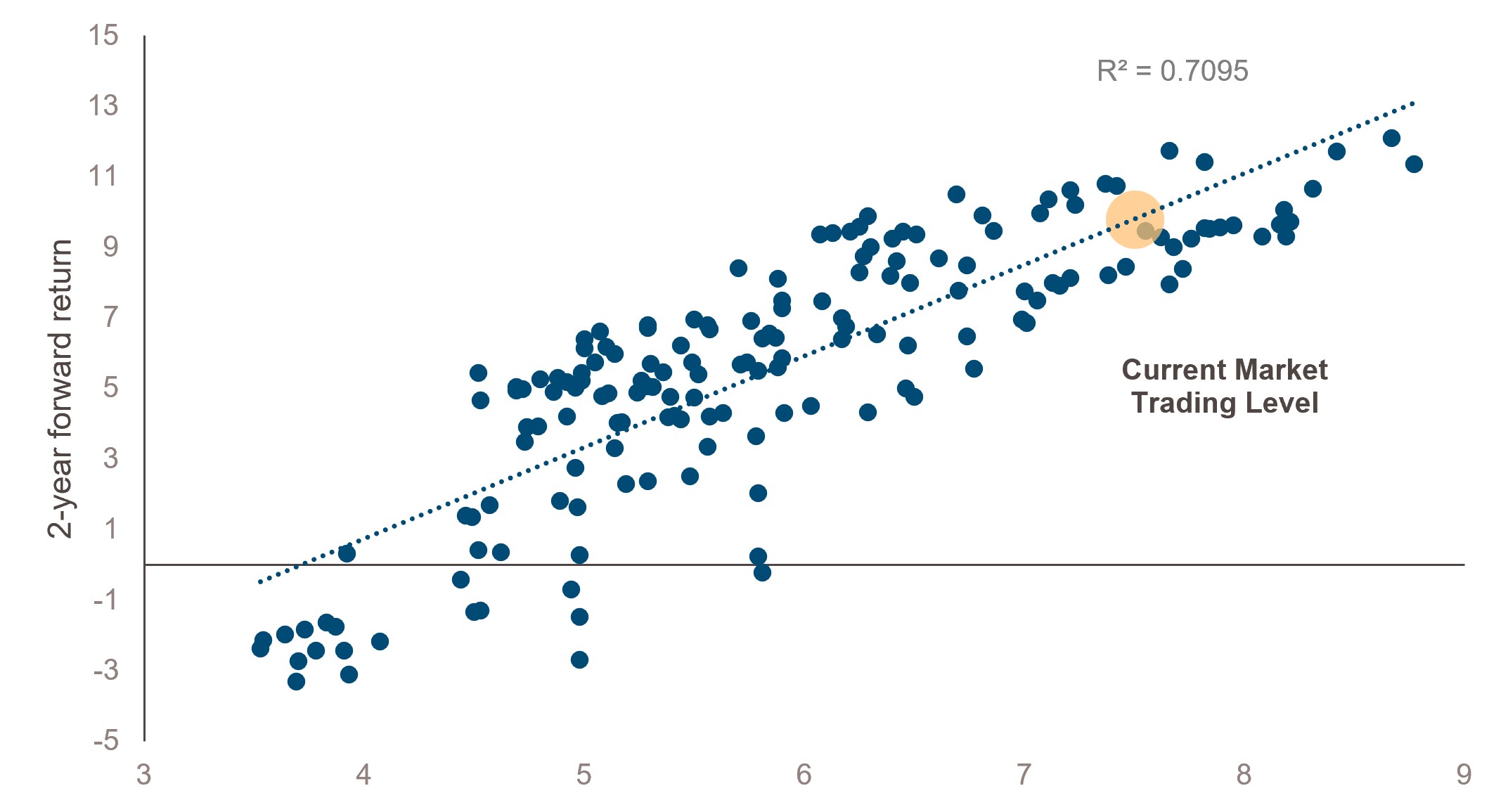
Source: Fig. 3: Muzinich and ICE Data Platform, as of September 30th, 2026. ICE BofA BB-B US Cash Pay High Yield Constrained Index (JUC4). (1) Index selected by Muzinich as best available proxy for the market. Breakeven calculated as yield to worst divided by duration to worst. Chart plots starting yield to worst against subsequent 2-year returns. Indices used are the best proxy for subject under discussion. For illustrative purposes only. Index performance is for illustrative purposes only. You cannot invest directly in the index. Muzinich views and opinion for illustrative purposes only, not to be construed as investment advice.
Past performance is not a reliable indicator of current or future results.
Where are we finding value?
As Fig. 4 shows, during the third quarter bonds in the telecoms and consumer sectors were weak performers while technology and energy bonds did well. We have been very selective this year, maintaining cautious positioning in cable and starting the year underweight the datacenter subsector. In recent months we have been adding to our datacenter exposure as relative value has improved significantly. We see BB-rated, close-to-completion datacenters with strong, investment grade lessees trading on top of single B-rated credits from other sectors with much less certain prospects and believe this is a buying opportunity. Fig. 5 highlights the spread widening experienced across all quality cohorts of the datacenter sector.
We are also adjusting our portfolios to reduce exposure to tight-trading, interest rate sensitive issuers. However, the market volatility has also created good opportunities to buy what we believe are good quality single B and BB-rated issuers with good balance sheets at yields of 9% or more because their near-term earnings trajectories have weakened due to oil price and rate volatility. We invest with a long-term view and have added risk in good companies operating in temporarily disrupted sectors where operating liquidity is ample and relative value is strong.
Figure 4: Sector dispersion creates opportunities
3Q 2026 sector returns
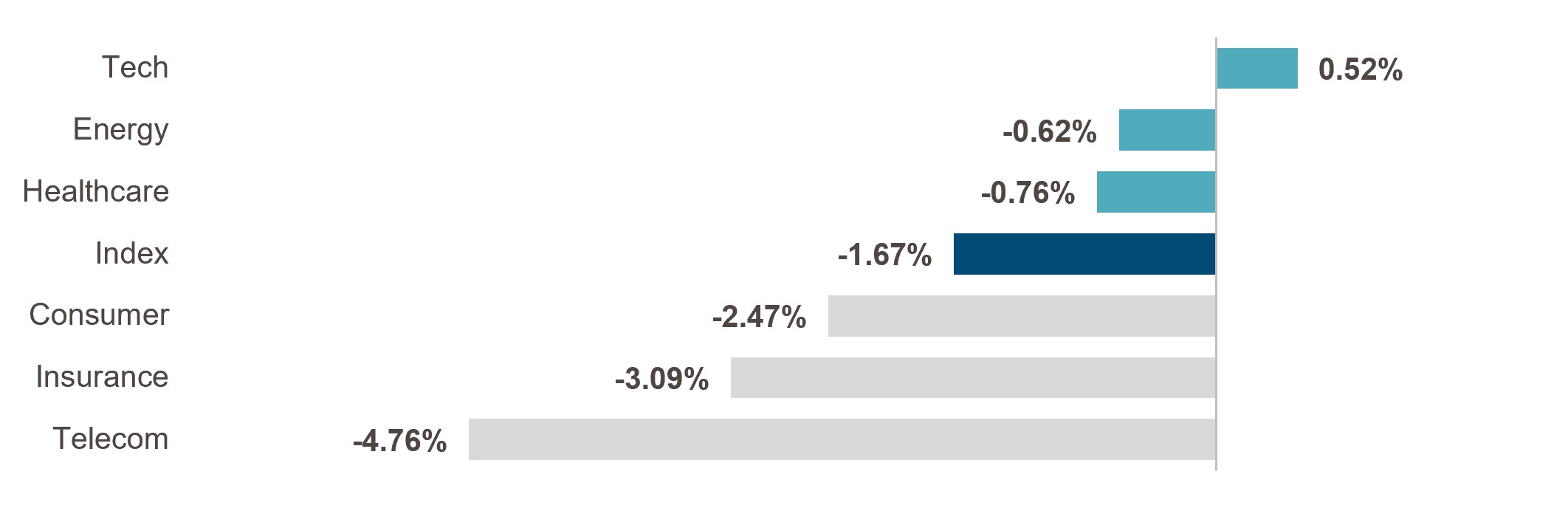
Figure 5: Datacenter spreads widen across the quality spectrum
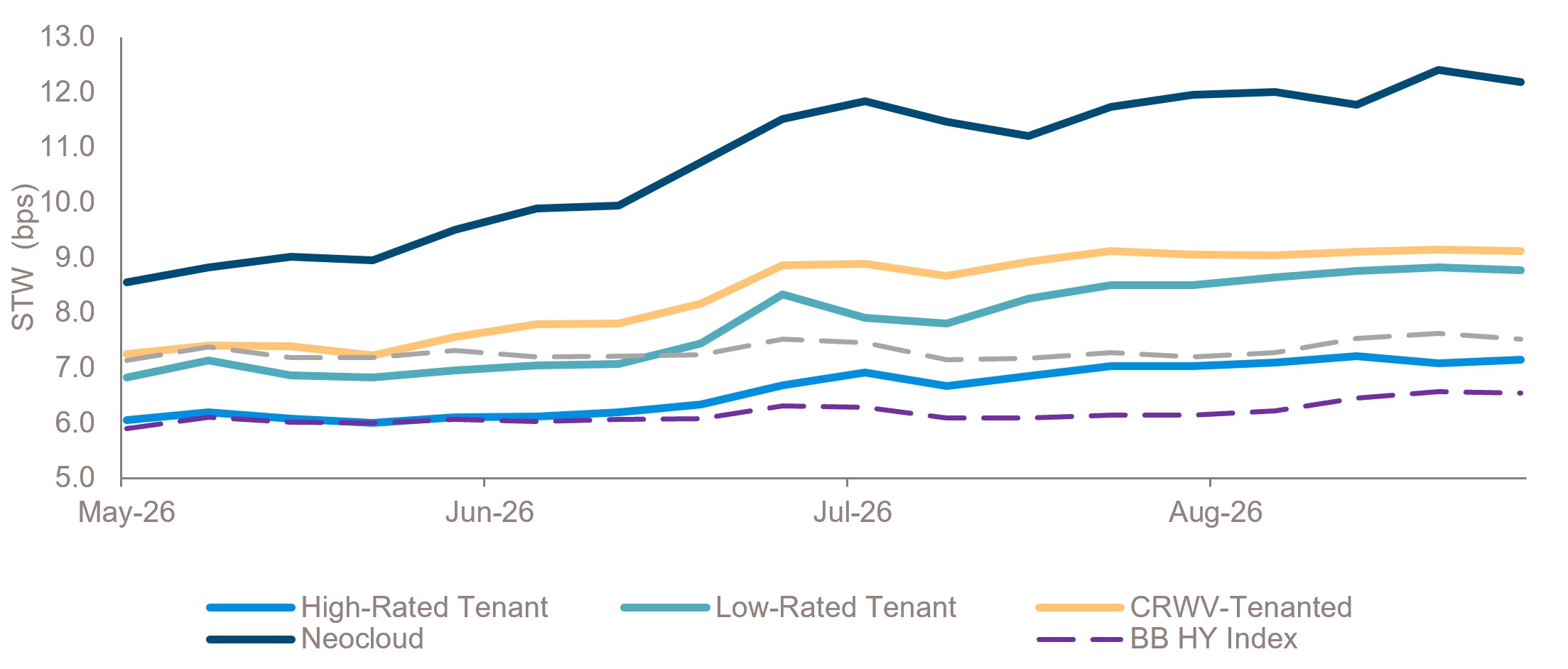
Sources: Fig. 4. BofA ICE and Bloomberg, sector returns for 3Q 2026 and year to date; “Index” return as provided in the source data. Fig. 5. Muzinich & Co., Bloomberg, ICE Index Platform, as of September 2026. Indices used are the best proxy for subject under discussion. For illustrative purposes only
Carefully adding risk as valuations improve
As we said last quarter, we continue to believe high yield fundamentals appear stable: balance sheets are solid, liquidity ample and the shrinking footprint of leveraged-buyout issuers supports a benign default outlook.
Looking ahead, we believe economic strength will likely continue, and market technicals improve, as multiple large transactions have now cleared. Trading levels have become more attractive, and we are therefore carefully adding risk consistent with our approach of buying bonds issued by companies that can survive both sides of the economic cycle. As always, we continue to take a prudent, research and relative value driven approach to portfolio construction.
References
1. ICE Index Platform, BofA US High Yield Index (H0A0), as of 30 September 2026
2. ICE Index Platform, as of 30 September 2026. ICE BofA BB-B US Cash Pay High Yield Index (J0A4).
This material is not intended to be relied upon as a forecast, research, or investment advice, and is not a recommendation, offer or solicitation to buy or sell any securities or to adopt any investment strategy. The opinions expressed by Muzinich & Co. are as of October 2026 and may change without notice.
--------
Index descriptions
H0A0 – The ICE BofA US High Yield Index tracks the performance of US dollar denominated below investment grade corporate debt publicly issued in the US domestic market. Qualifying securities must have a below investment grade rating (based on an average of Moody’s, S&P and Fitch), at least 18 months to final maturity at the time of issuance, at least one year remaining term to final maturity as of the rebalancing date, a fixed coupon schedule and a minimum amount outstanding of $250 million.
H0A1 - The ICE BofA BB US High Yield Index is a subset of the ICE BofA US High Yield Index (H0A0) including all securities rated BB1 through BB3, inclusive.
H0A2 - The ICE BofA single-B US High Yield Index is a subset of the ICE BofA US High Yield Index (H0A0) including all securities rated B1 through B3, inclusive.
H0A3 - The ICE BofA CCC & Lower US High Yield Index is a subset of the ICE BofA US High Yield Index (H0A0) including all securities rated CCC1 or lower.
H0A4 - The ICE BofA BB-B US High Yield Index is a subset of ICE BofA US High Yield Index including all securities rated BB1 through B3, inclusive. ICE BofA US High Yield Index tracks the performance of US dollar denominated below investment grade corporate debt publicly issued in the US domestic market.
--------
Important information
Muzinich and/or Muzinich & Co. referenced herein is defined as Muzinich & Co., Inc. and its affiliates. Muzinich views and opinions. This material has been produced for information purposes only and as such the views contained herein are not to be taken as investment advice. Opinions are as of date of publication and are subject to change without reference or notification to you. Past performance is not a reliable indicator of current or future results and should not be the sole factor of consideration when selecting a product or strategy. The value of investments and the income from them may fall as well as rise and is not guaranteed and investors may not get back the full amount invested. Rates of exchange may cause the value of investments to rise or fall.
Any research in this document has been obtained and may have been acted on by Muzinich for its own purpose. The results of such research are being made available for information purposes and no assurances are made as to their accuracy. Opinions and statements of financial market trends that are based on market conditions constitute our judgment and this judgment may prove to be wrong. The views and opinions expressed should not be construed as an offer to buy or sell or invitation to engage in any investment activity, they are for information purposes only.
This discussion material contains forward-looking statements, which give current expectations of future activities and future performance. Any or all forward-looking statements in this material may turn out to be incorrect. They can be affected by inaccurate assumptions or by known or unknown risks and uncertainties. Although the assumptions underlying the forward-looking statements contained herein are believed to be reasonable, any of the assumptions could be inaccurate and, therefore, there can be no assurances that the forward-looking statements included in this discussion material will prove to be accurate. In light of the significant uncertainties inherent in the forward-looking statements included herein, the inclusion of such information should not be regarded as a representation that the objectives and plans discussed herein will be achieved. Further, no person undertakes any obligation to revise such forward-looking statements to reflect events or circumstances after the date hereof or to reflect the occurrence of unanticipated events.
United Arab Emirates (UAE): This information is provided for discussion and informational purposes only and does not constitute an offer or solicitation in the UAE. It is intended solely for Professional Investors and should not be relied upon by any other person. This material has not been reviewed or approved by the UAE Securities and Commodities Authority, the UAE Central Bank or any other relevant authority. Nothing contained herein constitutes investment, legal, tax or other professional advice. Recipients should make their own independent assessment where appropriate.
Abu Dhabi Global Market (ADGM): This information is provided for discussion and informational purposes only and does not constitute an offer or solicitation in the ADGM. It is intended solely for Professional Clients (as defined by the Financial Services Regulatory Authority) and should not be relied upon by any other person. This material has not been reviewed or approved by the Financial Services Regulatory Authority or any other relevant authority in the UAE.
United States: This material is for Institutional Investor use only – not for retail distribution. Muzinich & Co., Inc. is a registered investment adviser with the Securities and Exchange Commission (SEC). Muzinich & Co., Inc.’s being a Registered Investment Adviser with the SEC in no way shall imply a certain level of skill or training or any authorization or approval by the SEC.
Issued in the European Union by Muzinich & Co. (Ireland) Limited, which is authorized and regulated by the Central Bank of Ireland. Registered in Ireland, Company Registration No. 307511. Registered address: 32 Molesworth Street, Dublin 2, D02 Y512, Ireland. Issued in Switzerland by Muzinich & Co. (Switzerland) AG. Registered in Switzerland No. CHE-389.422.108. Registered address: Tödistrasse 5, 8002 Zurich, Switzerland. Issued in Singapore and Hong Kong by Muzinich & Co. (Singapore) Pte. Limited, which is licensed and regulated by the Monetary Authority of Singapore. Registered in Singapore No. 201624477K. Registered address: 6 Battery Road, #26-05, Singapore, 049909. Issued in all other jurisdictions (excluding the U.S.) by Muzinich & Co. Limited. which is authorized and regulated by the Financial Conduct Authority. Registered in England and Wales No. 3852444. Registered address: 8 Hanover Street, London W1S 1YQ, United Kingdom. 2026-10-06-19560


By clicking "Submit", I am (i) signing up to receive the Opinion Pieces from the "Opinions" page of the Muzinich & Co website, (ii) representing that the above information is true and accurate and (iii) agreeing to join the Muzinich & Co mailing list. I understand that Muzinich & Co will not add retail investors or individuals with personal email addresses to its mailing list and represent that I am not a retail investor. By providing my personal and professional information I am consenting to its use and disclosure in accordance with the Muzinich & Co. Privacy Policy. I understand that I may withdraw my consent and unsubscribe from receiving future communications by clicking "Unsubscribe" from the emails that are sent to me from Muzinich & Co.

Sep 23, 2026
The hidden return in high yield
Much of the European high yield market is trading below par again - headline yield does not show what a potential early call is worth.

Aug 18, 2026
High yield’s AI era: Assessing the data center buildout
The rapid growth of data-center issuance is reshaping the US high yield market. While echoes of previous investment cycles remain, contracted cashflows and stronger counterparties are creating opportunities for investors able to navigate construction and credit risk.

Jul 29, 2026
Beyond spread: Why Europe’s growing high yield market is creating new opportunities
Much has been made of historically tight spreads in European high yield, with some investors questioning whether the asset class still offers attractive opportunities. Yet a closer look at the resurgence in primary market activity suggests the opportunity set is broader than headline valuations imply, argue Erick Muller and Thomas Samson.